Table of Contents
- Understanding Sleep Apnea
- Types Of Sleep Apnea You Should Know
- Common Signs And Symptoms Of Sleep Apnea
- What Causes Sleep Apnea?
- How Sleep Apnea Affects Your Health
- The Orthodontic Connection To Sleep Apnea
- Can Orthodontics Assist In Treating Sleep Apnea?
- Devices For Sleep Apnea?
- Orthodontic Treatment Options For Sleep Apnea
- Who Can Go For Orthodontic Treatment?
- Why Choose Central Coast Orthodontics
- Take The First Step Towards Better Sleep
Sleep is more involved in your health than most people think. When you’re not sleeping well, it will affect your energy levels, your focus and even your mood. If you are wondering “what is sleep apnea?” You are not alone. Sleep apnea is a condition that is often ignored. There are many patients who come to us without realizing that their sleep problems are related to their teeth or jaw.
Let’s explain this to you so that it makes it easier to understand.
Understanding Sleep Apnea
Sleep apnea is a major problem where you stop and start breathing while you are sleeping. This can happen many times while you are sleeping. Each time it occurs, your body wakes you up for a short time to start breathing again, even if you don’t realize it.
When the passage of air is blocked or restricted, the amount of oxygen entering the body decreases. Your brain recognizes this and wakes you up for a short time to start breathing again. This can repeat itself many times, which keeps you from having a deep sleep.
Many people think that snoring does not mean anything bad, but it is often the first sign of sleep apnea. Since this is happening while you are sleeping, you may not be aware of what is going on until it affects your daily life.

Meet Dr. Specht
Perfecting smiles for over 30 years with expert care and advanced technology.
15 Years of 5-Star Reviews • Virtual Visits Available
Types Of Sleep Apnea You Should Know
It is not the same for all. There are different types of sleep apnea and all have different causes.
Obstructive Sleep Apnea
This is a very common type of sleep apnea. It is caused by your throat muscles relaxing too much, which makes your airway narrow.
Central Sleep Apnea
This is a lesser common type of sleep apnea. It is caused by your brain not being able to send proper signals to your breathing muscles.
Complex Sleep Apnea
This is the mix of both obstructive sleep apnea and central sleep apnea. It may need to be treated in a more detailed manner.
Common Signs And Symptoms Of Sleep Apnea
Sleep apnea is not just a nighttime problem, as it affects your daytime as well.
Nighttime Symptoms and Signs
- Noisy or heavy snoring
- Gasping or choking sounds during sleep
- Teeth grinding
- Restless sleep
Daytime Signs and Symptoms and How They Affect Your Day
- Waking up in the morning still tired after a full night’s sleep
- Trouble concentrating
- Headaches in the morning
- Irritability and mood changes
What Causes Sleep Apnea?
It is not caused by just one thing. It can be caused by several factors, both in lifestyle and health, as well as structural problems. Your weight, age and lifestyle can all play a part in whether or not you will experience sleep apnea. But that is not all. Jaw and teeth alignment can cause sleep apnea. That’s where orthodontics comes in. The position of your teeth in relation to one another can affect how wide or narrow your airway is.
How Sleep Apnea Affects Your Health
Sleep apnea is more than just being tired all the time. It can eventually start to affect your overall health. It can cause you to feel lethargic and unfocused. It can also cause irritability. If untreated, sleep apnea can increase the risk of high blood pressure, heart problems and other health issues.
The Orthodontic Connection To Sleep Apnea
While most people do not automatically think of an orthodontist when thinking about sleep apnea, the connection does exist.
Your jaw is also integral in keeping your airway open. When it is positioned too far back, it does reduce the room for air to pass through.
There are also situations where your dental structure, such as how your teeth fit into your dental arch, could be causing issues for you. Catching these issues early allows us to steer you in the right direction.
Can Orthodontics Assist In Treating Sleep Apnea?
Orthodontics is not a replacement for a sleep specialist, but it is a vital component in the treatment of sleep apnea in some cases, particularly when the problem is related to the structure of the mouth. If your sleep apnea is related to the jaw and the way your teeth bite together, then orthodontics may be a viable treatment option. We often work in conjunction with sleep specialists to ensure you receive a thorough and accurate diagnosis of your sleep apnea. From there, we may be able to help alleviate your symptoms through the use of orthodontics.
Devices For Sleep Apnea
Of course, when thinking about sleep apnea treatment, one of the first things that comes to mind is the CPAP machine. While this can indeed be very effective in treating sleep apnea, it is not always easy to use. The mask and the general hassle can make it difficult to get through the night.
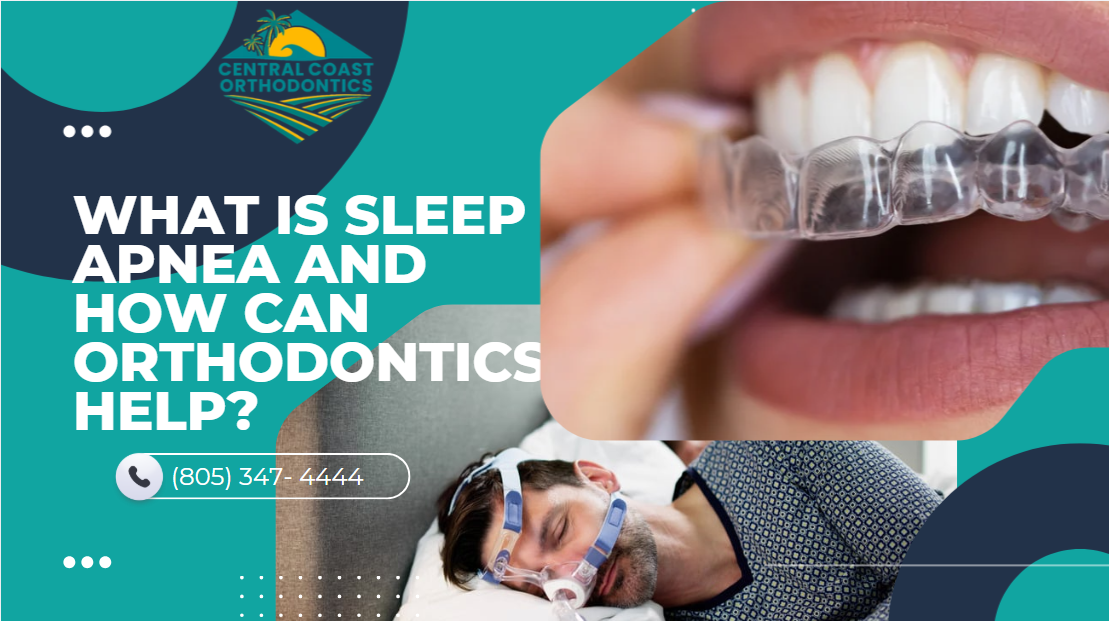
This is where a sleep guard, also known as a mandibular advancement device, can come in to help. This is a custom-made appliance that moves the jaw slightly forward to open the airway.
In the case of patients with obstructive sleep apnea, especially those in mild to moderate cases, this can be a good option.
What we have seen in practice is patients who already have CPAP machines but cannot use them regularly. In such cases, a sleep guard would be a better option than no treatment at all.
If you have been having trouble keeping up with CPAP, it might be time to consult your doctor to see if you would be a good candidate for a sleep guard. We see many patients with an AHI (Apnea-Hypopnea Index) as high as 40 see their numbers drop down to 5 or 0 in many cases. Additionally, insurance can help cover the cost of such a procedure.
Orthodontic Treatment Options For Sleep Apnea
Depending on your needs, we have several options available to treat Sleep Apnea.
Oral Appliances
We can use special devices to place your jaw in a position that will keep your airway open while you are sleeping.
Braces and Invisalign
We can use orthodontic treatments to correct problems with how your jaw and teeth function, which can improve breathing.
Palatal Expanders
If you are younger, we can use this treatment to increase space in your airway, which will allow for better breathing.
Surgical Orthodontics
We can use this option to improve breathing by correcting problems with how your jaw functions.
Who Can Go For Orthodontic Treatment?
Orthodontic care can be especially helpful for patients with sleep apnea issues if there is a structural concern.
Mild to moderate sleep apnea cases seem to benefit from orthodontic care. If you have issues with the way your jaw and mouth meet, orthodontic care can be especially helpful.
Why Choose Central Coast Orthodontics
We take the big picture into account at Central Coast Orthodontics. Your smile, your comfort and your well-being are all connected. We take the time to understand what’s really going on and help you along the way with solutions that make sense for you.
Our philosophy is simple, we believe in care that feels personal, comfort that feels natural and results that feel lasting.
Take The First Step Towards Better Sleep
Sleep plays a huge role in how you feel during the day and how your body works in the long run. If you suspect that your teeth and jaw are contributing to your sleep problems, we are here to help you get to the bottom of it.
Book your appointment today and take the first step towards your better sleep.